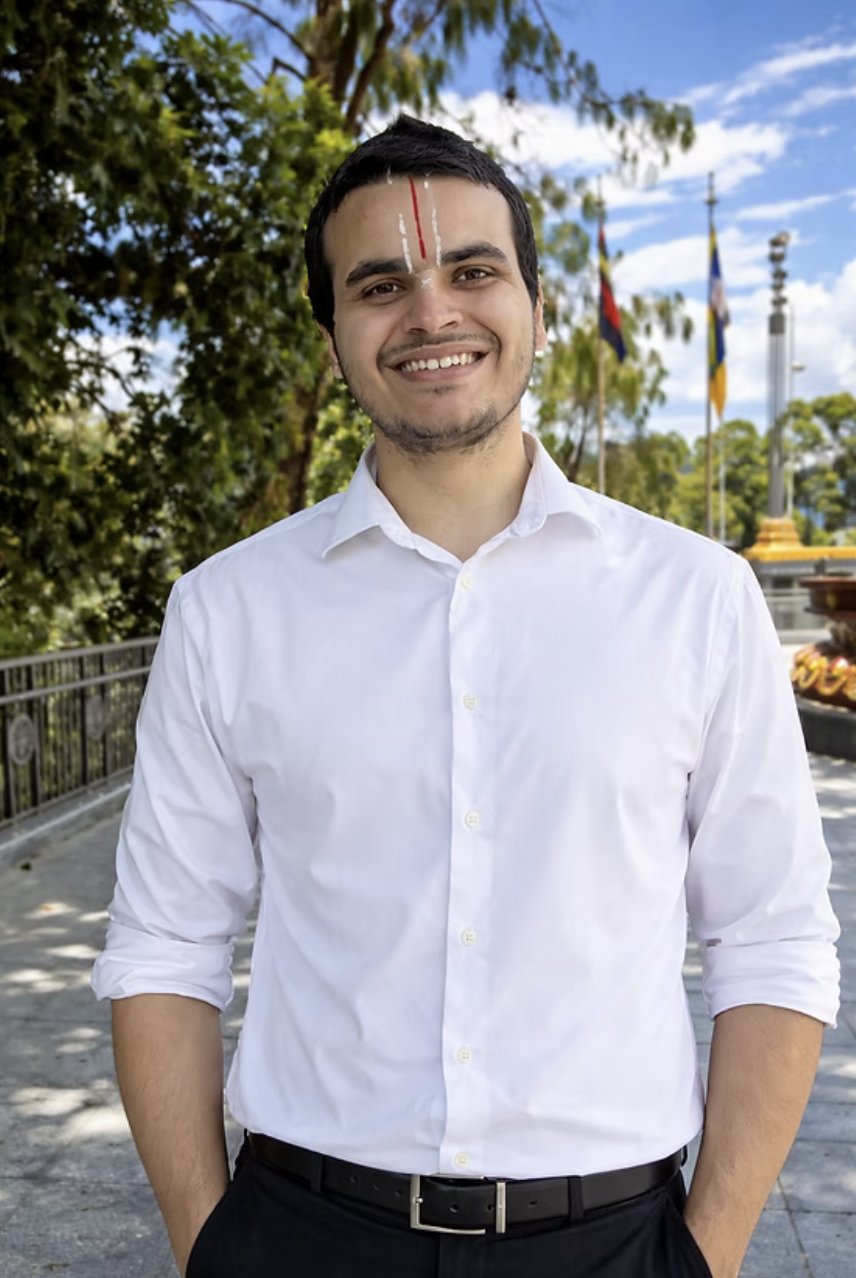
Devdarshan Bastola is a psychologist in Gangtok, India, who trained in the UK. He works by video with Indians living in the US, Canada, the UK, Europe, the Gulf, Singapore and Australia, in English or Hindi. A 60-minute session is ₹4,000 for clients outside India, charged in Indian rupees, and the first 20-minute call is ₹299.
Why see a therapist in India when you live abroad?
If you grew up in an Indian family and now live in London, New Jersey, Dubai or Singapore, a good part of therapy can go on explaining: what your parents expect, what marriage means in your family, why going home is complicated. With a therapist from the same world, that time goes to the problem.
Life between two countries brings its own questions. Parents are growing older far away. A decision about marriage or children has more voices in it than your own. A visa decides where you can work and for how long. You may be asking whether to go back. None of this needs translating here.
Dev is from Sikkim and spent his university years in Manchester and Cambridge before returning to India, so he knows both sides of that life.
What time would my sessions be?
Sessions start between 4 and 8 PM India time every day, and between 6:30 and 9:30 AM India time on Fridays and Sundays. The table shows what those times are where you live.
| Where you live | Every day | Friday and Sunday mornings in India |
|---|
| New York | 5:30 AM to 9:30 AM | Thu and Sat, 8:00 PM to 11:00 PM |
|---|
| Chicago | 4:30 AM to 8:30 AM | Thu and Sat, 7:00 PM to 10:00 PM |
|---|
| Los Angeles | 2:30 AM to 6:30 AM | Thu and Sat, 5:00 PM to 8:00 PM |
|---|
| Toronto | 5:30 AM to 9:30 AM | Thu and Sat, 8:00 PM to 11:00 PM |
|---|
| London | 10:30 AM to 2:30 PM | Fri and Sun, 1:00 AM to 4:00 AM |
|---|
| Berlin | 11:30 AM to 3:30 PM | Fri and Sun, 2:00 AM to 5:00 AM |
|---|
| Dubai | 2:30 PM to 6:30 PM | Fri and Sun, 5:00 AM to 8:00 AM |
|---|
| Singapore | 6:30 PM to 10:30 PM | Fri and Sun, 9:00 AM to 12:00 PM |
|---|
| Sydney | 9:30 PM to 1:30 AM | Fri and Sun, 12:00 PM to 3:00 PM |
|---|
Start times for a 60-minute session, worked out for today's date. The booking page shows every time in your own time zone and tells you when your clocks are about to change.
The Friday and Sunday morning sessions were added for people in the US and Canada, for whom they fall on Thursday and Saturday evening.
What does it cost, and how do I pay?
For clients based outside India, sessions are ₹4,000 for 60 minutes, ₹6,000 for 90 minutes and ₹8,000 for 120 minutes. The first 20-minute call is ₹299 and is credited to your first full session.
You pay by card when you book, in Indian rupees, and your bank converts the amount. International cards are accepted. You do not need an Indian bank account or an Indian address. You can pay for one session at a time; packs of five or ten sessions cost 10% and 15% less. The cancellation and refund terms are on the refund page.
People in Nepal, Bhutan and Sri Lanka pay the India fees.
Sessions in Hindi
Therapy goes further in the language you think in. Sessions can be entirely in Hindi, or move between Hindi and English as you speak.
आप हिंदी में सहज हैं तो पूरा सेशन हिंदी में हो सकता है। देवदर्शन बस्तोला मनोवैज्ञानिक हैं (GMBPsS) और गंगटोक, सिक्किम से ऑनलाइन सेशन लेते हैं। पहली 20 मिनट की बातचीत ₹299 की है, जो पहले सेशन में जोड़ दी जाती है।
Dev also works in Nepali: therapy in Nepali.
What do people come with?
People write about anxiety, overthinking, low mood, a loss or a move that has not settled, and therapy that helped without resolving what lay underneath. Each has its own page under What brings you here.
Some people abroad come for another reason. They want therapy that draws on the Gītā, Yoga and Vedānta, from someone clinically trained.
What happens first?
The first step is a 20-minute call. When you book, a calendar invitation with a Google Meet link is sent to your email. Dev listens to what the
difficulty is and explains how he would shape the sessions. You see whether you are comfortable with him
and whether you want to go ahead. How the sessions work describes the first full session and
how often you meet after that.